ServicesWell Water Treatment
Well Water Treatment in Gulfport
If your well water smells like rotten eggs, leaves orange rings in the toilet or crusts your faucets, we can fix that. We look at what your water is doing, explain the equipment that answers it and install a system sized for your home.
Clean, Odor-Free Water From Your Own Well
A private well gives you water that no utility treats for you. What reaches the tap depends on the ground it came through, and in Florida that often means dissolved iron, hydrogen sulfide and the calcium that limestone gives up. We plan well water treatment around what your water is actually doing: the smell, the stains, the scale and how much water your household uses each day.
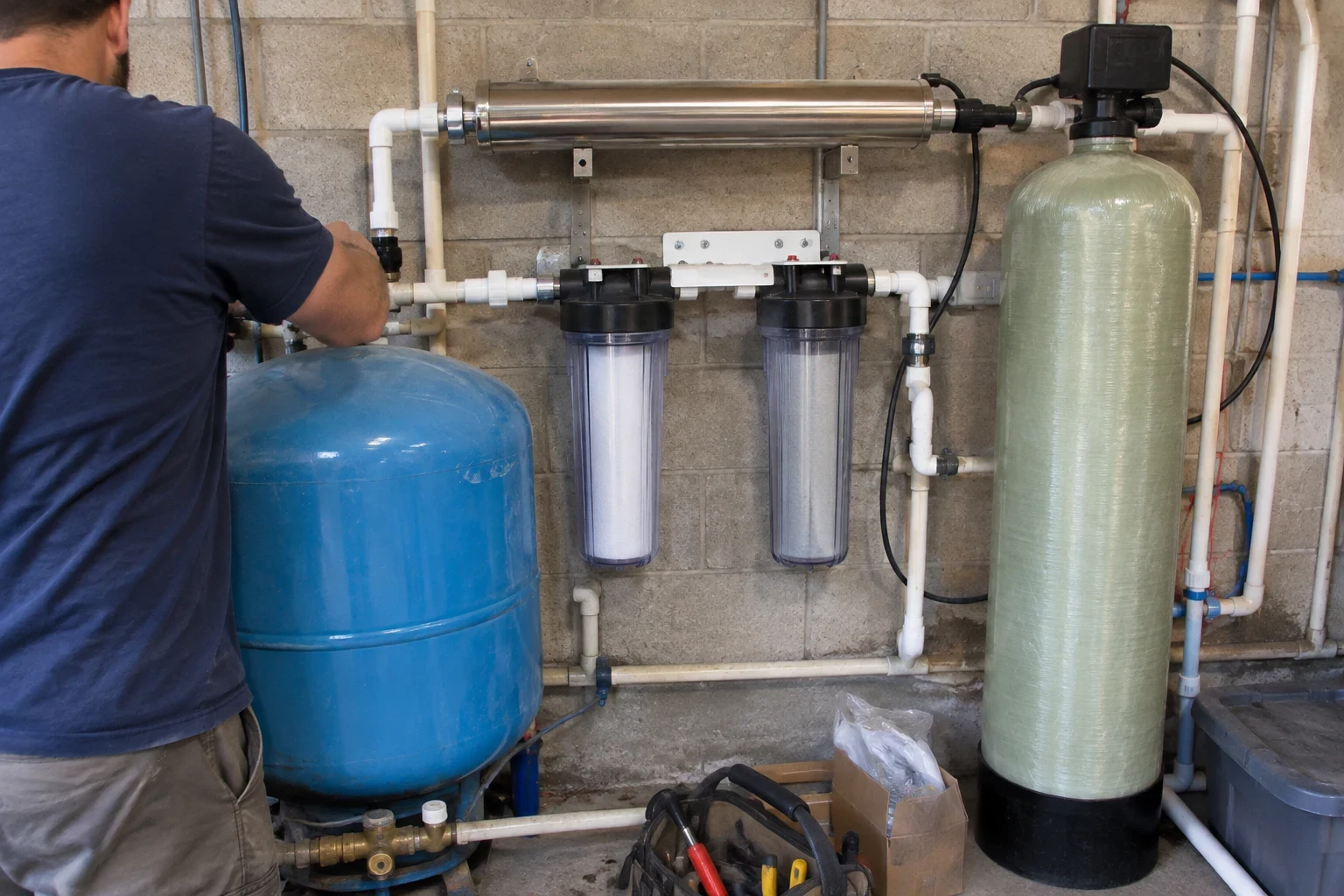
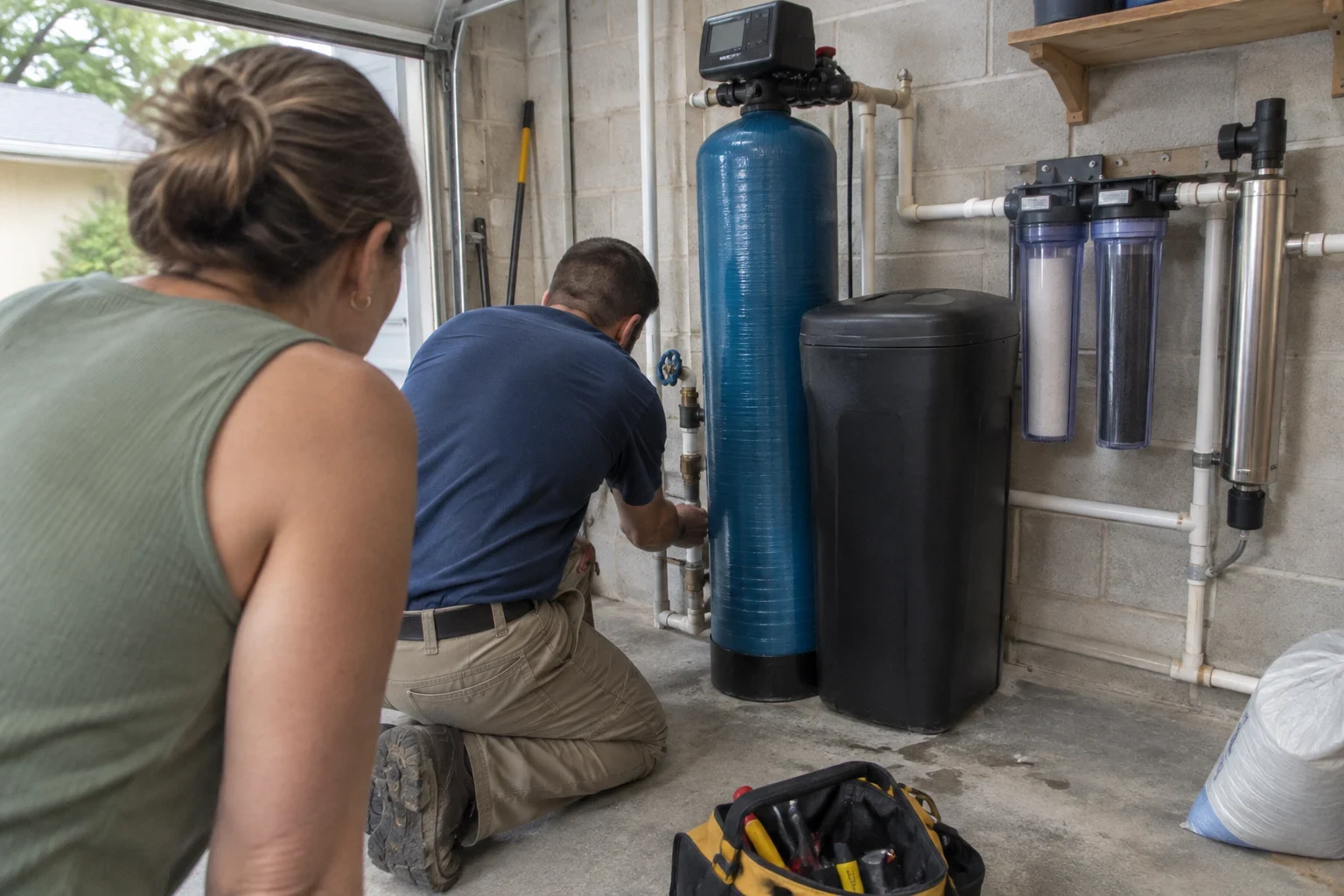
Most well systems are a short line of equipment near the pressure tank or in the garage. A sediment filter goes first, then a tank that pulls out iron and sulfur, then a softener or carbon stage if your water needs it. We explain each piece before anything goes in, so you know why it's there and what it will ask of you later.
If staining or scale has already marked fixtures or an appliance, we photograph it and write down what we found. Those notes are yours to keep, and they can help if you ever bring the question to your home insurer. We don't act as the adjuster or tell you what a policy will pay.
What Your Well System Includes
- Sediment prefilter
- Wells pull up sand and fine grit, especially after the pump cycles hard. A prefilter catches it before it can scratch valve seals or clog the tanks behind it.
- Iron and sulfur removal tank
- Inside this tank, a trapped pocket of air reacts with the dissolved iron and hydrogen sulfide so they settle out as solids the media can hold. On a set schedule the tank flushes those solids to drain. It is the heart of most well setups.
- Softening or carbon polishing when it's needed
- If your water also leaves hard white scale, we add a softener. If a faint taste or odor remains after iron removal, a carbon stage finishes the job. We only add a stage when your water calls for it.
- Bypass valve and clean connections
- Every system gets a bypass so you can keep water flowing while a cartridge is changed or a valve is serviced. Backwash lines run to a proper drain point, not onto your lawn.
- Photos and written notes
- You get a record of the stains, scale or worn parts we saw before the install and a plain description of what we put in.
- Help after the install
- We offer ongoing customer support for maintenance, filter replacements and service needs, so you have someone to ask when a cartridge is due or the water changes.
Signs Your Well Water Needs Treatment
A rotten egg smell
That is hydrogen sulfide, common in Florida wells. It is often strongest in the shower or right after the water sits overnight.
Orange or brown stains
Dissolved iron stains toilets, sinks and laundry. If you run irrigation from the well, you may see the same rust color on walls, sidewalks and the driveway.
Black specks or slime in the toilet tank
Dark grit or a slick film usually points to manganese or iron bacteria living in the plumbing.
White crust on faucets and showerheads
Hard water leaves scale that clogs aerators and shortens the life of a water heater.
A metallic taste
Iron can make water and coffee taste off even when stains are faint.
Old equipment that no longer keeps up
If you already have a filter but the smell or stains came back, the media may be spent or the system may be undersized. Our water softener and filtration system replacement page covers that work.
What Shapes the Cost of Well Water Treatment
Every well behaves a little differently, so we price the system only after we've seen your setup and heard what your water is doing. Your written estimate lists the equipment and the labor separately, so you can see exactly where the money goes. Here is what tends to move the number most.
How much iron and sulfur is present
A mild odor can often be handled with one tank. Heavy iron paired with a strong sulfur smell may need a larger tank or an extra stage.
Flow rate and household size
The system has to keep pace when two showers and the washer are running at once. More people and more bathrooms usually mean bigger tanks.
Number of treatment stages
A single iron removal tank costs less than a setup that also includes softening and carbon polishing.
Space, plumbing and drain access
Cramped spaces, old galvanized pipe near the pressure tank or a long run to a drain and an outlet all add labor time.
How a Well Water Job Goes
- 1
A conversation by phone
You tell us what you smell, see and taste, how many people live in your home and whether the well also feeds irrigation. If you have results from a past water analysis, keep them handy.
- 2
A visit to your well equipment
We look at the pressure tank, the pump controls, the plumbing layout and the space available. We photograph any staining, scale or worn parts and note them for you.
- 3
A written recommendation
You get a plain list of the equipment we suggest, what each stage does and what upkeep it needs. If a simpler setup will solve the problem, that's what we recommend.
- 4
Install day
Water is off for a few hours while we plumb in the system, add the bypass and run the drain line. Once the backwash schedule is set, we rinse the fresh media until the water runs clear and go over each fitting to make sure nothing drips. Then we tidy up and show you how the bypass and the settings work.
Well Water Treatment Questions
Will this get rid of the rotten egg smell for good?
An iron and sulfur removal tank handles most sulfur odor in well water. If the smell only shows up in hot water, the cause may be the water heater's anode rod reacting with the water, and we'll tell you that instead of selling a bigger system. We check which taps smell during the visit.
What warranty comes with the system?
The whole-home treatment tank has a lifetime warranty. Our installation workmanship is covered for one year. We go over both on install day so you know what each one covers.
How much upkeep does a well system need?
Most of the work happens on its own, because the iron and sulfur tank cleans itself on a timer. Your part is swapping the sediment cartridge when it's due and keeping salt in the softener if you have one. We offer ongoing customer support for maintenance, filter replacements and service needs, so you can reach us when something comes up.
Can your notes help with an insurance claim for stained fixtures?
Our photos and written notes give you a clear record of what we saw and when. Many policies treat gradual staining and wear differently from sudden damage, so we can't say whether yours will pay. Your insurer makes that call, and we're happy to explain what we documented if you share our notes with them.
Can I add treatment if my well only runs irrigation?
Yes. Iron removal on an irrigation well can stop the rust streaks sprinklers leave on walls and pavement. Sizing is different because sprinkler zones draw a lot of water at once, so we look at your zones before recommending equipment.
Let's Sort Out Your Well Water
Tell us what your water is doing and how your well is set up. We'll explain what will fix it and what the job involves before anything is installed.