ServicesWater Softeners
Water Softeners in Gulfport
Hard minerals show up as chalky rings on taps, a cloudy film on glassware and sediment settling in your water heater. We put in softeners matched to your water and the people in your home, and if softening will not solve your problem, we tell you up front.
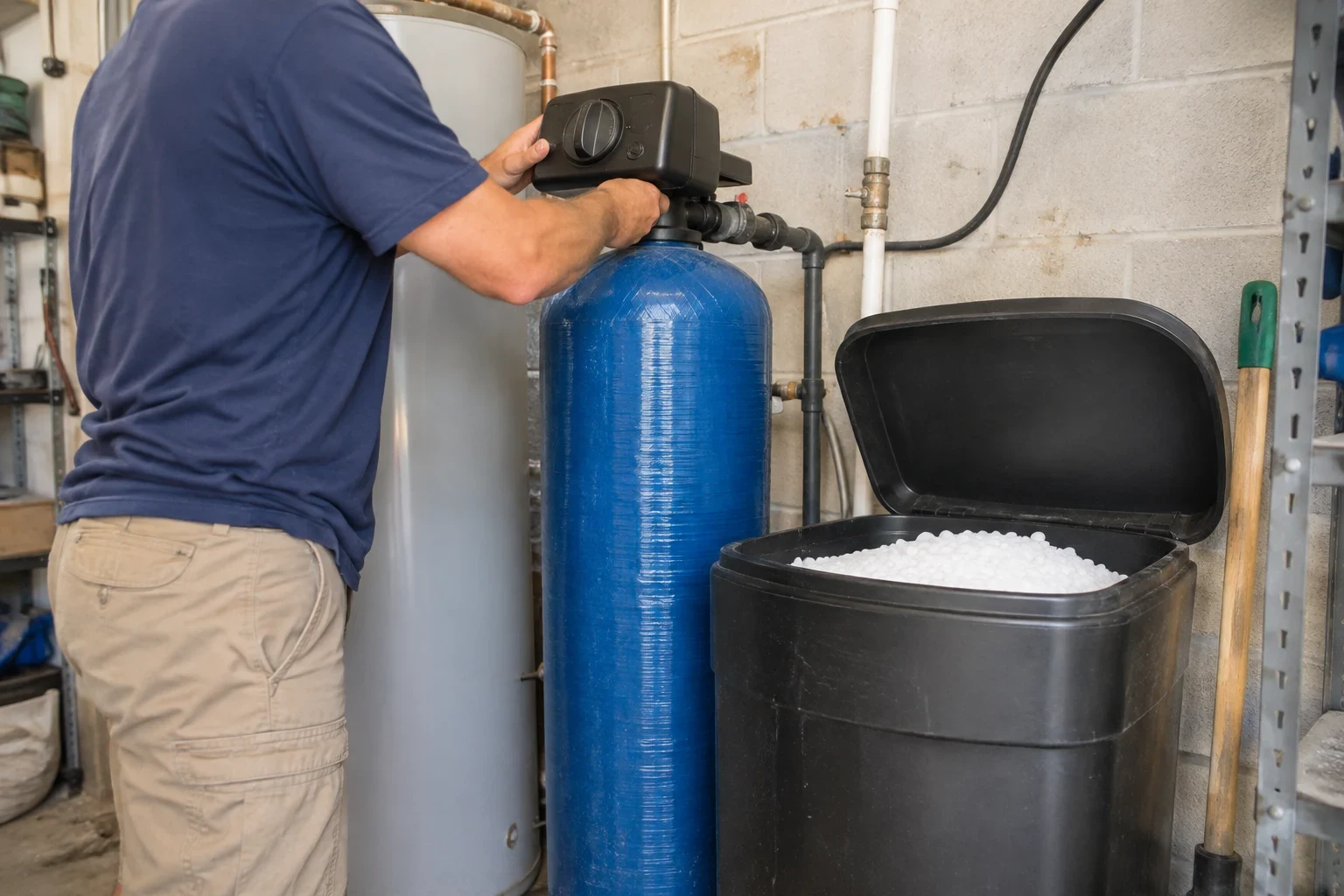
How softening works and who it helps
Inside a softener, water flows through resin beads that trade away calcium and magnesium for sodium or potassium. Calcium and magnesium are the culprits behind scale in your plumbing, showerheads and appliances. Take them out and soap foams up better while faucets and glass stay clearer.
Hardness is the only thing a softener fixes. Chlorine taste, odors and most other contaminants pass right through. If those bother you more than scale does, whole-home filtration or reverse osmosis is likely the better choice, and we will point you there before you spend a dollar.
Scale is a frequent complaint in Florida homes, but no two houses have quite the same water or usage. So we start with what you are seeing and your utility's hardness numbers before we suggest any equipment.
What your softener installation covers
- Matched to your household
- We choose the resin tank based on your hardness level, how many people live in your home and how many bathrooms you have. Too small and it regenerates constantly and burns through salt. Too large and you pay for capacity you never use.
- Bypass and solid connections
- We fit a bypass valve on every system, which lets you take the softener offline while the rest of the house keeps running water. The tie-in to your main uses proper fittings, and the drain line runs to an approved drain.
- Regeneration based on use
- The control valve is programmed to regenerate after a set amount of water has passed through, rather than on a calendar. Your salt and water go further that way.
- Startup and a short walkthrough
- Before we leave, salt goes into the brine tank and the system completes its first cycle while we watch. Then we show you how to check the salt level, use the bypass and make sense of the display.
- Warranty coverage
- The whole-home treatment tank carries a lifetime warranty, and the labor we put into setting it up comes with a 1-year installation workmanship warranty.
- Help down the road
- We offer ongoing customer support for maintenance, filter replacements, and service needs, so there is someone to reach when your system needs a hand.
When your home may need a softener
Chalky rings on taps
Pale, crusty deposits around faucet bases, showerheads and tub edges are mineral scale. They return soon after you scrub them off.
Cloudy glassware
A dull haze on glasses straight out of the dishwasher is usually a hard water sign rather than a detergent problem.
Poor lather
Hardness minerals bind with soap and leave residue behind. You end up using extra shampoo and still feel coated afterward.
A noisy water heater
Minerals collect in the bottom of a tank heater and cause popping or rumbling as it heats. That layer lowers efficiency and can shorten the heater's working life.
Weak spray at fixtures
Scale clogs the tiny holes in showerheads and faucet aerators, so flow drops at that fixture while pressure elsewhere seems normal.
What shapes the cost of a softener
Softener pricing depends on your water and on how your home is plumbed, so one number would not be honest. We put each part of the job on its own line in writing. These are the things that move the total.
Resin capacity and control valve
More people and harder water call for a larger resin tank. A valve that meters water use costs more up front than a basic timer, but it tends to use less salt year after year.
Installation location
Setting the unit in a garage right beside the main line is straightforward. Running new pipe to a utility closet or an outdoor pad takes more labor and material.
Distance to a drain and outlet
The softener needs somewhere to send rinse water and a place to plug in. When neither is close, the extra routing adds to the job.
Age of the pipes at the tie-in
Worn shutoff valves or corroded fittings where we connect may need swapping so the new joints stay tight. You see photos of them before anything is added to the estimate.
Adding filtration
Some households want softer water and less chlorine taste at the same time. We list the softener and any filter separately so you can choose one, the other or both.
What to expect from start to finish
- 1
We talk it through by phone
Tell us about the buildup or spotting and how many people share your home. If you have your utility's water quality report handy, we can read the hardness number together. You get a plain answer on whether a softener makes sense.
- 2
We check the install spot
At your home we find where the water main comes in, where the softener can stand and whether a drain and outlet are within reach. We photograph anything worn or leaking so you know about it before we begin.
- 3
Install day
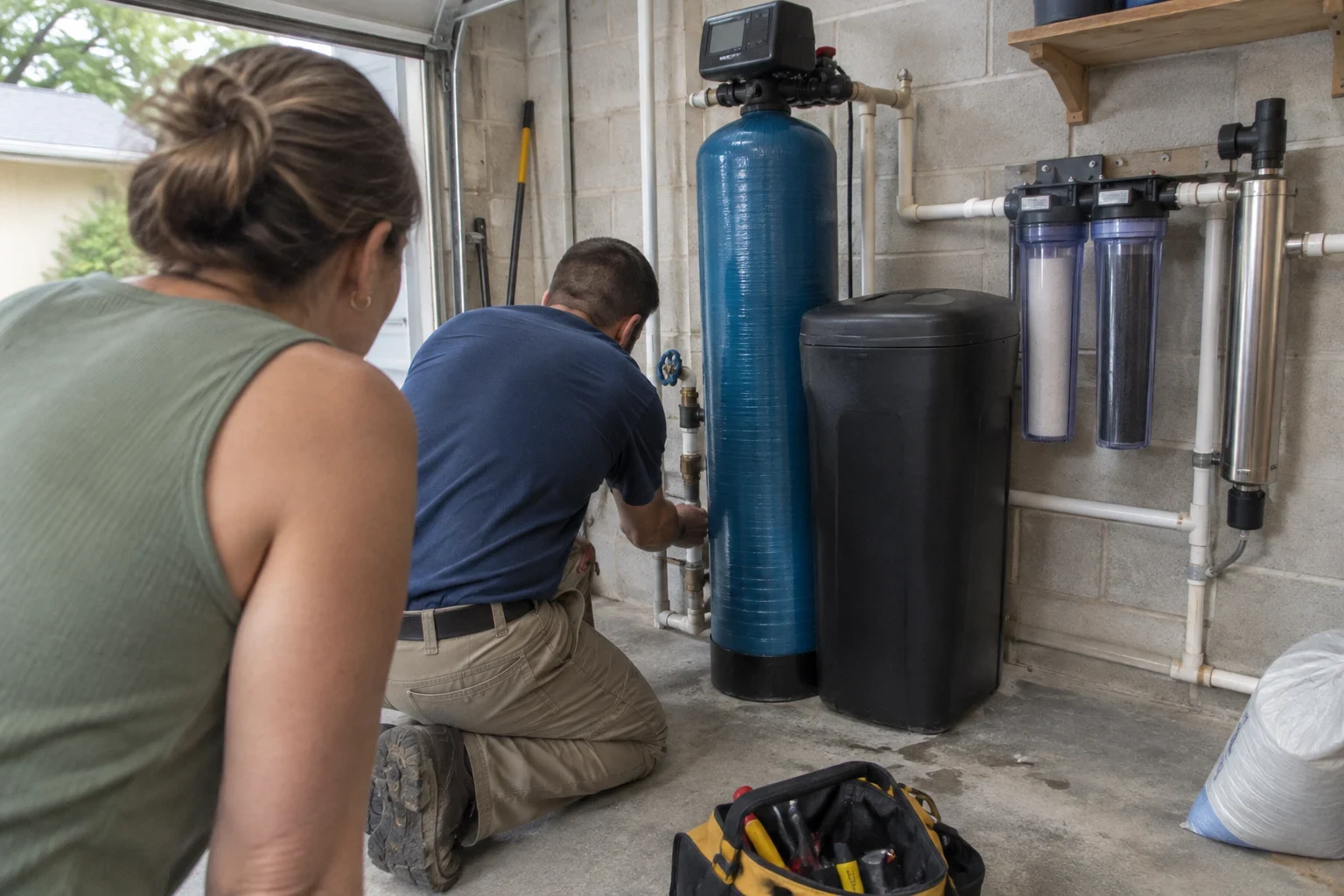
Most jobs wrap up in part of a day. Your water is shut off only during the cut-in. We cover the floor in our work area and tidy up before we go.
- 4
Startup and handoff
We run the first regeneration, look over every joint for drips and program the hardness and capacity settings. Then we show you the basics and explain how to reach us for ongoing support.
Common questions about water softeners
Will softened water taste salty?
For most people, no. A softener adds only a small amount of sodium, and few people ever notice it. If you are watching your sodium, potassium chloride can be used instead of salt, or a reverse osmosis faucet at the kitchen sink can supply your drinking and cooking water.
Will a softener take care of chlorine taste?
It will not. Softening targets only the minerals that cause hardness. Our chlorine and chloramine removal and whole-home filtration systems deal with taste and smell, and either one can be installed right beside a softener.
How much salt will I go through?
Your usage depends on two things: the mineral level in your supply and the amount of water your family runs each day. Many homes top off the brine tank every month or two, and a metered valve makes a bag last longer than a timer does. An easy rule is to keep the salt sitting above the waterline inside the tank.
Our old softener leaked onto the floor. Can you help with an insurance claim?
Whether it is covered depends on your policy and on what caused the leak, and that call belongs to your insurer. We can photograph the unit, the failed part and the wet or damaged area, then write up what we found. Those records are yours to give your adjuster when you file.
Is it worth repairing my current softener?
Often it is. A sticking valve, a clogged injector or spent resin can usually be put right through our water softener repair and maintenance service. If the unit is past a sensible repair, we will say so plainly.
Let's sort out your scale problem
Describe the buildup, the spotting or the struggle to get a good lather, and we will give you an honest read on whether softening fits your home. We work in Gulfport and nearby, including South Pasadena and St. Pete Beach.