ServicesReverse Osmosis
Reverse Osmosis Systems in Gulfport
A reverse osmosis system sits in the cabinet below your kitchen sink and feeds its own small faucet beside the main one, giving you one clean source for drinking and cooking. Before anything is installed, we explain what it removes, what it leaves alone and the upkeep it needs.
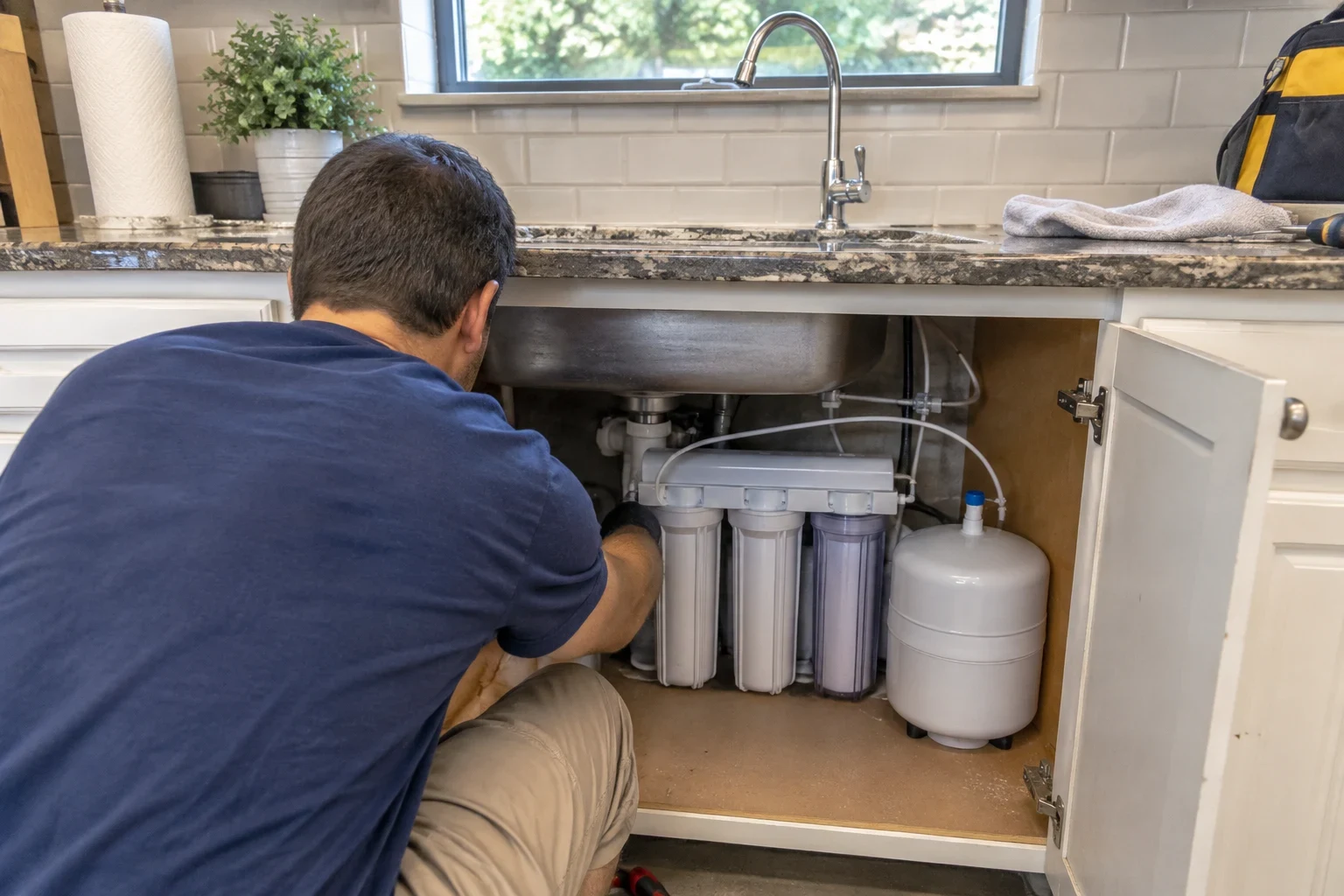
How Reverse Osmosis Works at Your Sink
The heart of the system is a membrane so fine that it holds back most dissolved solids, lead from older pipes and solder among them. Ahead of it, a sediment cartridge traps grit and a carbon cartridge removes chlorine or chloramine, both of which would shorten the membrane's life. A last carbon stage smooths out the taste before water reaches the faucet.
RO only treats the water at that one tap, the water you drink and cook with. Showers, laundry and the rest of the house are untouched. If a chlorine smell follows you from room to room, whole-home filtration or chlorine and chloramine removal is usually where to start, and an RO unit works fine next to either.
We'd rather be straight with you. Utility water in our area generally meets federal standards, so our talk centers on taste, aging plumbing and the added margin you want for your family. If what you have now is working well, we'll tell you that.
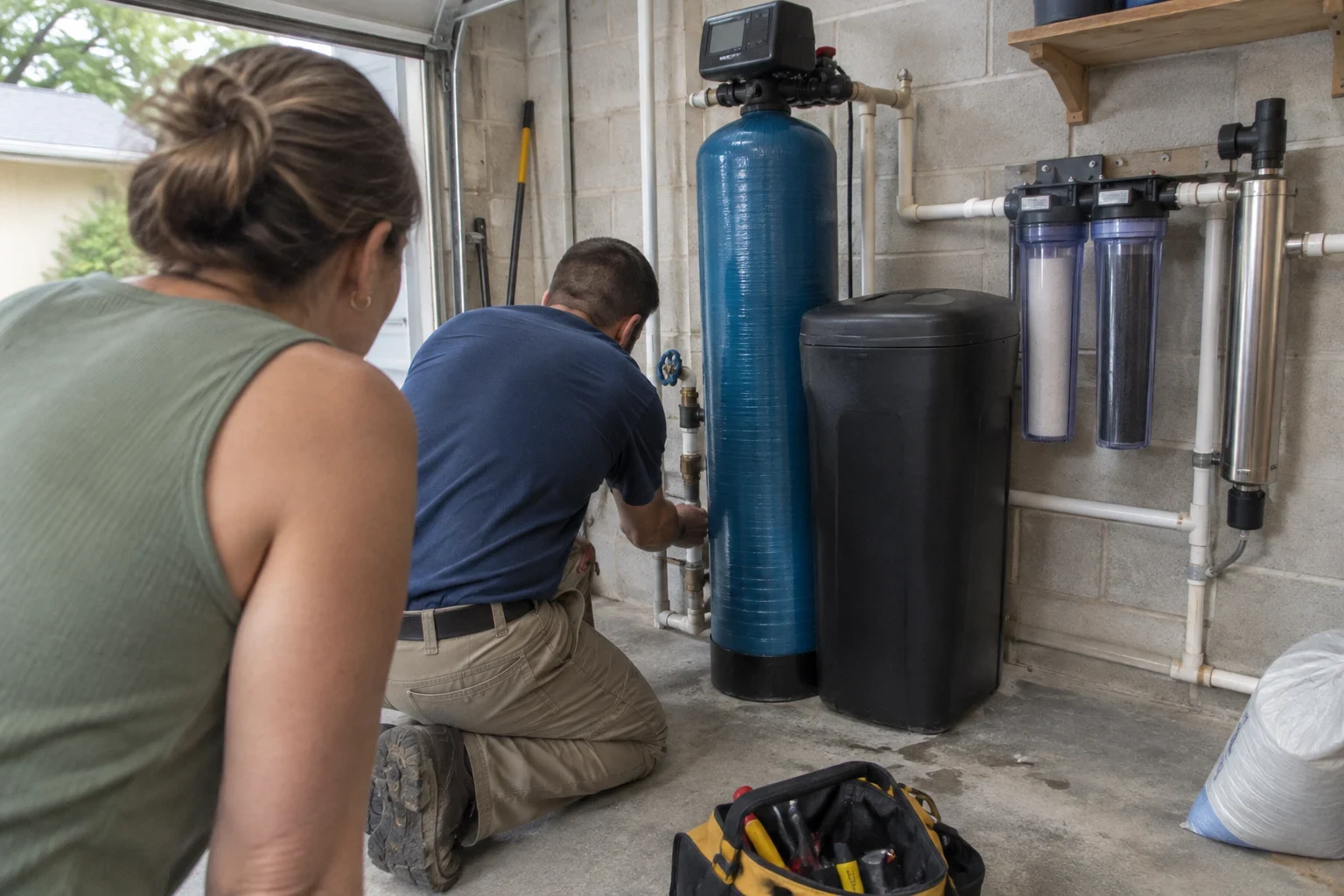
What Comes With Your RO Install
- 01
Full filter train
A sediment prefilter, carbon prefilter, RO membrane and carbon post-filter, mounted so you can swap cartridges without a struggle. When your supply is treated with chloramine, we use carbon made to handle it.
- 02
Its own drinking faucet
The faucet goes into a spare hole or one we cut for it. Stone and quartz counters get slow, careful drilling.
- 03
Tank or tankless setup
Most cabinets hold a small pressurized tank without trouble. A tankless unit saves room but needs power close by, and we confirm that before you decide.
- 04
A code-compliant drain line
Wastewater from the membrane runs to your sink drain through an air gap or drain saddle, which keeps it from ever flowing back toward the filters.
- 05
Add-ons if you want them
Tubing to the fridge and ice maker, a remineralization cartridge for fuller taste, or a booster pump if pressure in your home is on the low side.
- 06
A handover and a record
When the work is done, we point out the shutoff valve, go over what each stage does and take photos of the finished setup. You keep a short record of the parts and when the next filter change is due.
Questions about Reverse Osmosis?
Call(727) 634-9738When Reverse Osmosis Is a Good Fit
Bottled water is a weekly errand
If nobody in the house will drink from the tap, a dedicated RO faucet usually puts an end to the cases in the cart and the bottles in the recycling.
Coffee and ice taste like a pool
That chlorine note is easiest to notice in hot drinks and ice. The carbon stages take it out before it gets to your cup.
Your plumbing has some age
Houses built before the mid-1980s can still have lead solder or old fixtures. At the tap you drink from, RO is among the most effective ways to cut lead.
Spots and crust on the kettle
White buildup on a kettle, coffee maker or glasses comes from dissolved solids, and the membrane removes them.
An existing RO unit is struggling
A slow trickle at the faucet, a tank that won't refill or a wet cabinet floor are signs your current unit needs service or replacing.
What to Expect From Start to Finish
- 1
We start with a call
Tell us what you don't like about your water and what's under your sink right now. We'll lay out which system styles would work and what each one means for your kitchen.
- 2
We see the space
At the visit we look at cabinet room, the supply valve, the drain, your countertop and the water pressure. You receive a written estimate with each part listed before anything goes on the calendar.
- 3
Install day
We put down a protective mat, empty and cover the cabinet, then fit the unit, faucet and drain connection. A typical install takes a few hours, and the kitchen water is shut off for only part of it.
- 4
Testing the fittings and handing over
New cartridges get flushed, each connection gets checked for drips, and we show you how the system runs and when cartridges are due. The cabinet is left clean and we haul away the boxes.
What Moves the Cost of an RO System
Your estimate is built around your own sink and cabinet, with parts and labor shown on separate lines. If something changes once we open the cabinet, we stop and ask you before going further. A few choices and conditions account for most of the difference from one kitchen to the next.
- Storage tank versus tankless
- A tank-style unit is the lower-cost option to buy. Tankless models free up cabinet room and deliver water faster, but they carry a higher price and need an outlet nearby.
- Faucet hole and countertop
- If a spare sprayer or soap dispenser hole is available, mounting the faucet is quick. Boring through granite, quartz or other stone calls for special bits and more careful labor.
- Extra stages and connections
- A remineralization cartridge, a pressure booster or a run to the refrigerator each brings its own parts and time.
- What we find under the sink
- A seized or corroded shutoff, a tight cabinet, or an old unit that has to come out first can lengthen the job. We flag these at the visit so the estimate already reflects them.
Common Questions About Reverse Osmosis
How much water goes down the drain?
Any RO unit rinses its membrane by sending a portion of water to the drain. Current models are much more efficient than ones from years past. The exact ratio varies with the model and the pressure in your home, and we share it for each system we recommend.
When do the cartridges get replaced?
Plan on fresh prefilters and a new post-filter about every six to twelve months, and a new membrane roughly every two to three years, depending on use. We give you the dates in writing. Our ongoing customer support covers maintenance, filter replacements and service needs whenever you need them.
Does RO water taste flat?
Because the membrane pulls out minerals, some people find the water tastes lighter than they expect. A remineralization stage puts a little calcium and magnesium back if you like more body in your glass.
Will it feed my fridge and ice maker?
In most kitchens it can. We run tubing from the RO unit to the refrigerator, and the fridge's built-in filter often becomes unnecessary.
Is the installation covered by a warranty?
Yes. Our install work comes with a 1-year installation workmanship warranty. If you also add whole-home filtration, its whole-home treatment tank carries a lifetime warranty.
Water from a failed filter soaked the base of my sink cabinet. Will you help me document it for my insurer?
Yes. Before we pull anything out, we photograph the wet cabinet, any stained flooring and the parts that gave way, then write a brief summary of what we found. You can pass those records along to your homeowner's insurance company. Your insurer and adjuster make the coverage call, so we won't guess at the outcome, but we're happy to explain our findings in everyday terms.
Let's Sort Out Your Drinking Water
Give us a ring and describe your kitchen and what you'd like your water to taste like. We'll walk you through the system choices and find a time to see the space, in Gulfport or a nearby town.