ServicesSoftener Repair & Maintenance
Water Softener Repair & Maintenance in Gulfport
When spots come back on the shower glass or the salt never seems to go down, your softener is telling you something. We find the actual cause, show you what failed and explain your options before any work starts.
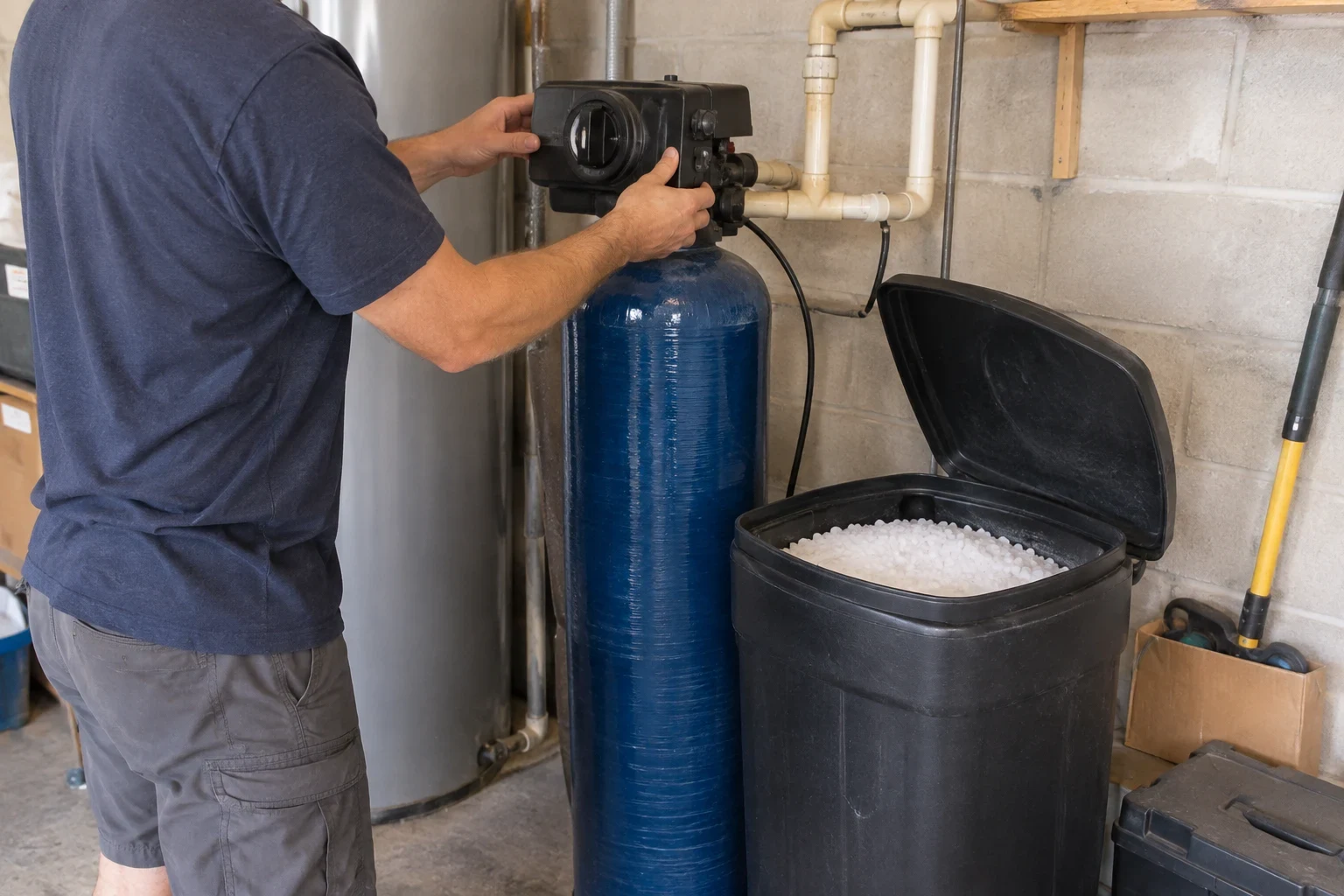
Most Softener Problems Have a Plain, Fixable Cause
A water softener is a simple machine with a few parts that wear out. The control valve runs the cycles, the resin tank does the softening and the brine tank holds the salt that cleans the resin. When one of those stops doing its job, hard water slips through, and you notice it in the dishwasher, on the faucets and in how soap lathers.
Our water softener repair and maintenance work starts by finding which part is at fault. Sometimes it is nothing more than a hardened crust of salt in the brine tank. Sometimes it is a cracked distributor tube or a tired motor. Either way, we tell you what we found in plain words and let you decide.
If a leak or an overflowing brine tank has already wet a floor or a cabinet, we photograph the failed part and where the water went, and write down what we found. That gives you a clear record if you choose to talk to your insurance company. We can walk you through how these claims tend to unfold, but deciding coverage is your insurer's call alone, so our job is to describe what happened accurately and leave the verdict on your policy to them.
What a Repair or Maintenance Visit Covers
Brine tank cleanout
We break up salt bridges and mushy salt at the bottom of the tank, clear out sludge and check the float and brine well. A clogged brine tank is one of the most common reasons a softener stops softening.
Control valve service
We check the timer or meter settings, the motor, the seals and spacers, and the piston. Worn seals let hard water bypass the resin, and a valve that lost its settings after a power outage may be regenerating at the wrong time or not at all.
Injector and line cleaning
The small injector that draws brine into the resin tank clogs easily with sediment. We clean it along with the brine line and confirm the drain line and flow control are clear.
Resin condition check
Resin can be fouled by iron or broken down by chlorine over the years. We look at how it is performing and tell you whether a cleaning will help or the bed needs replacing.
Settings matched to your household
We set regeneration frequency and salt dose to fit how much water your home actually uses, so you are not wasting salt or running out of soft water.
A full cycle before we leave
After any repair we run the softener through a regeneration and watch each stage, so you know it is working before we pack up.
Signs Your Softener Needs Attention
Scale and spots are back
White crust on faucets, cloudy glassware or spots on the shower door mean hard water is getting past the resin.
Salt level never drops
If you added salt weeks ago and it looks untouched, the system is probably not drawing brine. A salt bridge or a clogged injector is the usual cause, and Florida humidity makes bridging more likely.
Water standing in the brine tank
A few inches of water is normal in many units. A tank that is mostly water, or one that overflows, points to a float, brine valve or drain line problem.
Tan beads in the faucet aerator
Small resin beads in your sinks or toilet tanks usually mean a cracked distributor tube or a failed screen inside the resin tank.
Constant running or a salty taste
A softener that seems to regenerate over and over, or water that tastes salty, often comes from a stuck valve or incorrect settings.
How a Service Visit Goes
- 1
A conversation by phone
You tell us the brand, the age if you know it and what you are noticing. A couple of follow-up questions help us bring the likely parts, and then we pick a visit time that fits around your day.
- 2
Diagnosis at your home
We open up the brine tank and control valve, check settings and look for leaks. We take photos of anything worn, cracked or leaking so you can see it too.
- 3
An honest answer before work starts
We explain what failed, what it takes to fix it and whether repair makes sense for your unit's age. You get a written estimate and you decide. If replacement is the better value, we say so and walk you through it.
- 4
Repair, test and cleanup
We make the repair, run a full regeneration cycle, wipe up and haul away old parts and salt sludge. We go over any maintenance you can easily do yourself between visits.
What Shapes the Cost of a Softener Repair
Most of the price depends on which part failed and how hard it is to reach. A brine tank cleanout is a very different job from a new control valve or a resin bed. We put every part and the labor on a written estimate before we start, so the number you agree to is the number you see.
- The part that failed
- Seals, injectors and floats are small parts. Motors, valve heads and resin are bigger items that move the total more.
- Age and brand of the unit
- Parts for common, newer valves are easier to find. Older or discontinued models can take longer to source, and sometimes the part costs more than the unit is worth.
- Resin condition
- Resin that only needs cleaning keeps the cost down. Resin that is fouled or broken down needs replacing, which adds parts and time.
- Location and access
- A softener tucked in a tight closet or behind other equipment takes longer to work on than one with open space around it.
Softener Repair Questions We Hear Often
Something not covered here? (727) 634-9738
How often should my softener be serviced?
Most households do well with a yearly check that covers the brine tank, injector and valve seals. Homes with heavy water use or iron in the water may need it more often. Between visits, keep the salt topped up and break up any crust you see forming. We offer ongoing customer support for maintenance, filter replacements, and service needs, so you can call us whenever something seems off.
Is it worth repairing an older softener?
Often it is, especially when the problem is a salt bridge, a clogged injector or worn seals. If the valve is obsolete or both the valve and resin are failing, putting money into it rarely pays off. We will tell you which side of that line your unit is on, and if replacement makes more sense, our water softener and filtration system replacement service covers it.
Can you work on a softener you did not install?
Yes, in many cases. Have the brand and model handy on the phone. We check on parts availability first and let you know up front, so nobody makes a trip to your home for a unit we cannot source parts for.
Will my homeowners insurance cover damage from a softener leak?
That depends entirely on your policy and on what caused the leak, and only your insurer can decide it. What we can do is photograph the failed part and the affected area, write down what we found and explain how these claims usually go. Many policies treat sudden leaks differently from slow wear, so that record can help your conversation with the adjuster.
What warranty comes with your work?
For systems we install, the whole-home treatment tank carries a lifetime warranty and the installation carries a 1-year workmanship warranty. If we installed your system and something goes wrong, call us and we will go over what applies to your situation.
Get Your Softener Working Again
Tell us what your softener is doing and we will find the cause, explain it plainly and fix what needs fixing. We work in Gulfport and nearby towns like South Pasadena, St. Petersburg and Seminole.